


Specialized interpreting in the literary and artistic sector
The world of culture and the arts unfolds in communicative contexts where language transcends mere information to become aesthetics, metaphor and critical thought. In these settings, the spoken word becomes an extension of the work itself.
As interpreters with extensive experience in museums, artistic forums and international film or literary festivals —such as those organised by the Instituto Cervantes, the Alliance Française or the Dublin International Literature Festival— we are fully aware that technical accuracy must be accompanied by deep creative sensitivity. Unlike other fields, interpreting artistic creation requires mental agility capable of capturing the author’s intention, the richness of their imagery and the intellectual and conceptual register of the discourse, ensuring that the strength of the original message remains intact in the target language.
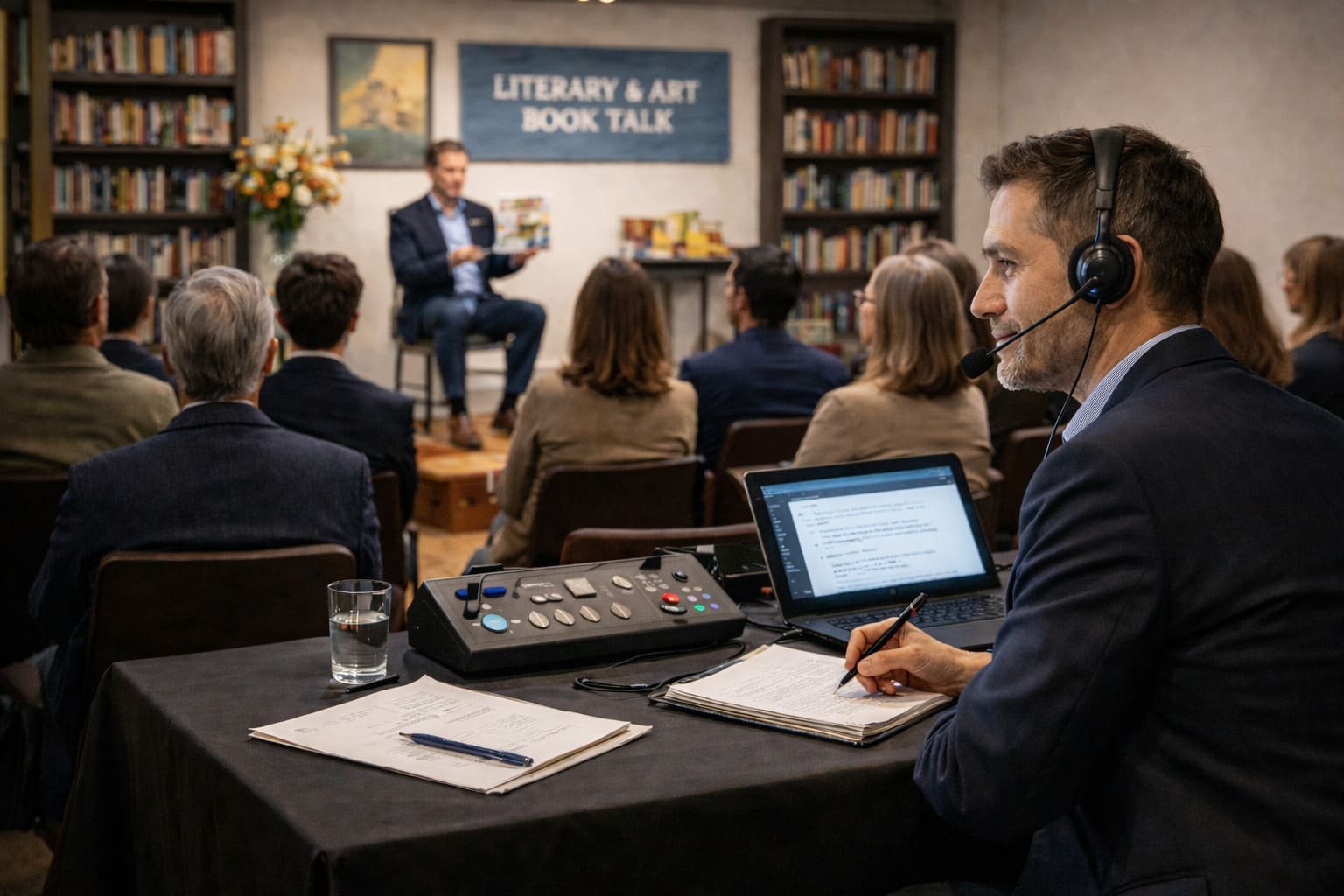
Consecutive interpreting at the XI ISLA Literary Festival – Instituto Cervantes in Dublin
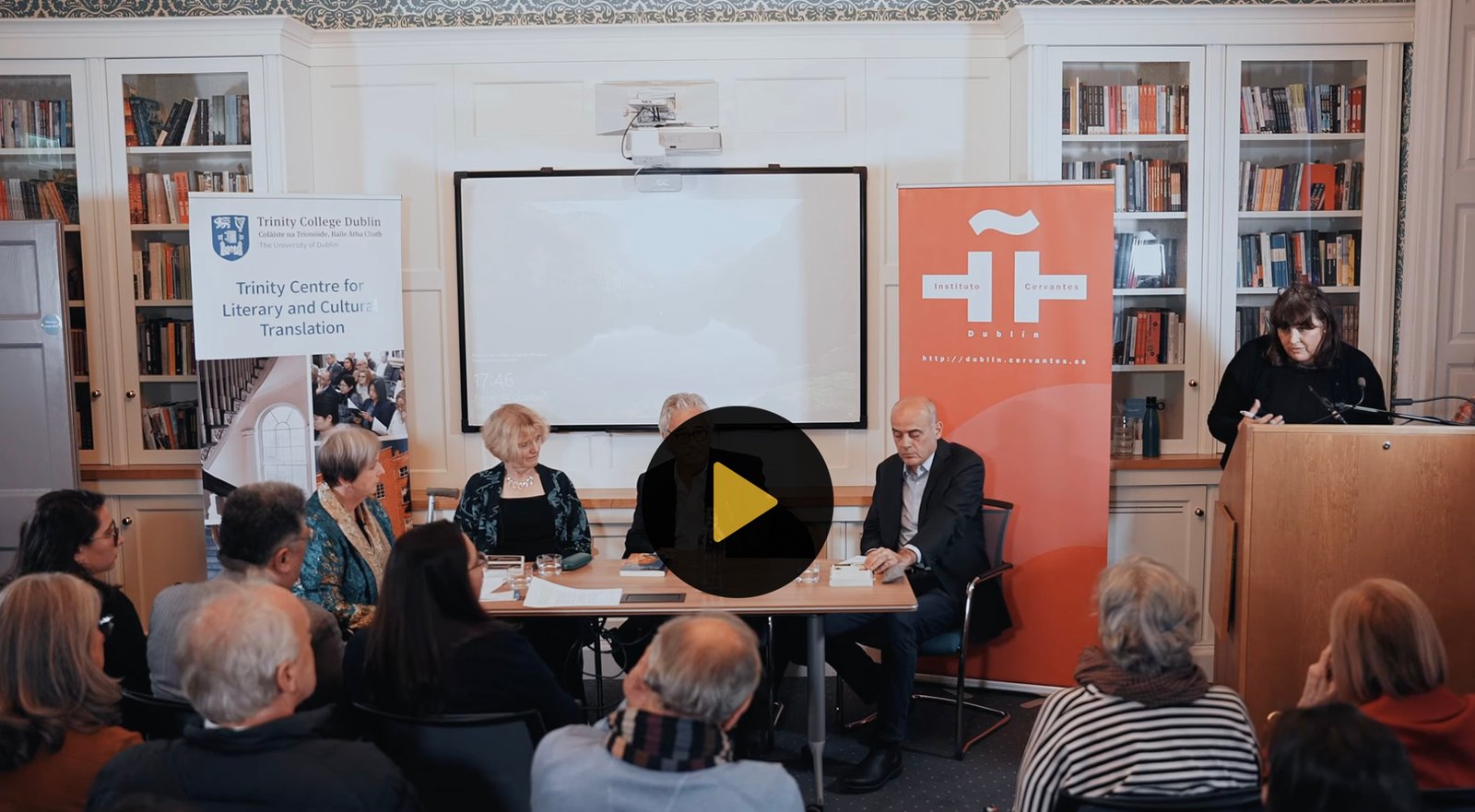
Interpreting during an interview with Yrsa Sigurðardóttir, the queen of Icelandic crime fiction.
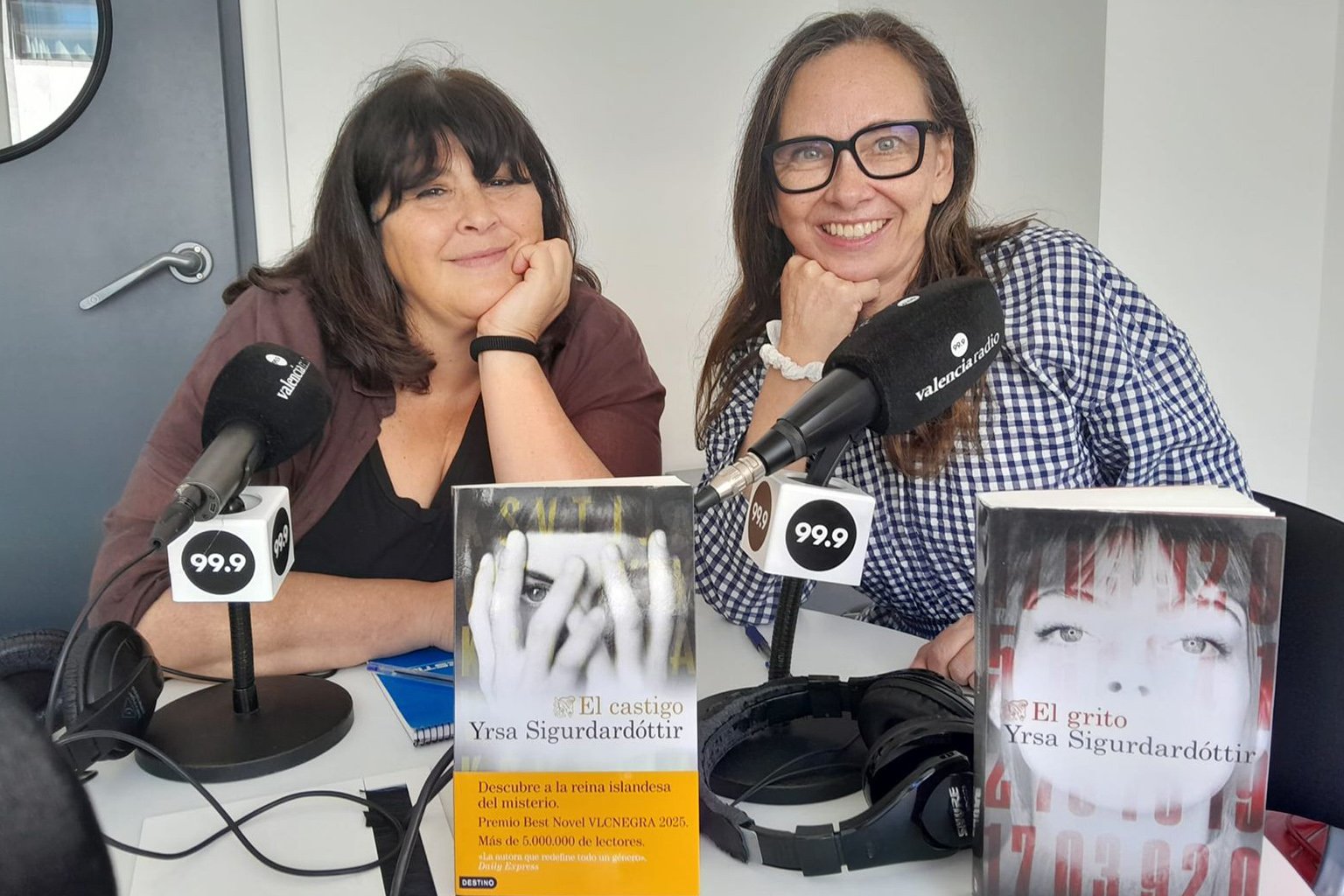
Our added value:
Strong Academic Background: Holding a degree in History and Art History allows us to approach each project with in-depth knowledge of artistic movements, periods and visual languages. This academic foundation ensures a conceptual understanding that goes far beyond linguistic translation.
Proven Track Record and Long-Term Trust: More than 20 years of continuous collaboration with cultural institutions, festivals and foundations support our work. This stability reflects an unwavering commitment to excellence and a genuine passion for cultural dissemination.
Fidelity and Aesthetic Sensitivity: We provide linguistic mediation that respects the speaker’s style, tone and rhythm, ensuring that the essence of the artwork or the artist’s ideas reaches the audience with complete naturalness.
Thorough Preparation: each assignment is preceded by extensive preparation: reading the works, analysing exhibition catalogues and reviewing the author’s ideas and references. We handle specialised artistic terminology and complex concepts in contemporary literary and artistic theory with precision.
Complete Flexibility (on-site, hybrid or online): We adapt to any format —from round tables in auditoriums or interviews with authors for the media to international webinars— ensuring that culture flows clearly and professionally to its global audience.


ACCESS TO CULTURAL KNOWLEDGE
Conference interpreting enables authors, researchers, artists and cultural professionals to share ideas, works and reflections with international audiences.
Thanks to professional interpreting at cultural events, audiences can access presentations, debates and literary encounters regardless of language, promoting the international dissemination of literature, art and cultural thought.


PRESERVING ARTISTIC DISCOURSE
In the literary and artistic sphere, language does not merely convey information; it also expresses style, intention and aesthetic sensitivity.
Specialised interpreting in literature and the arts makes it possible to convey these nuances into the target language, respecting the author’s tone, the rhythm of the discourse and the cultural references present in each intervention.


INTERNATIONAL CULTURE DIALOGUE
Literary festivals, comparative literature conferences, author talks and international exhibitions bring together professionals from different countries.
Interpreting at international cultural events facilitates the exchange of ideas between writers, artists, critics, translators, publishers and international audiences, fostering cultural dialogue and collaboration between cultural institutions.
FIELDS OF INTERPRETING IN THE LITERARY, ARTISTIC AND CULTURAL SECTOR
Interpreting across diverse settings
Literature and Critical Thought:
International literary festivals (such as those organised by the Instituto Cervantes, the Alliance Française or the Dublin International Literature Festival).
Book presentations, author interviews and literary talks.
Seminars on literary criticism, cultural studies and meetings between translators and writers.
Arts, film and culture:
Film festivals and artist presentations.
Conferences and round tables on art, aesthetics, architecture and cultural heritage.
Masterclasses in literature, history and archaeology.
Conferences and forums on urban planning.
Academy and humanity:
Humanities conferences and academic symposiums.
International courses at universities and cultural institutions.
Sensory and technical experiences:
Specialised technical tastings (wine, olive oil, whisky, coffee and tea).
Interpreting for gastronomic events.
Art and Society:
European cooperation projects focused on culture and the social role of the arts.
Interpreting modalities for cultural events
Simultaneous interpreting in a booth – ideal for international literary conferences and academic congresses with a large number of attendees.
Consecutive interpreting – commonly used for book presentations, author interviews and panel discussions.
Bilateral interpreting – suitable for professional meetings between publishers, translators, cultural institutions or artists.
Interpreting with portable equipment – useful for guided exhibition tours, cultural visits or travelling presentations.
Remote or hybrid interpreting – for online literary festivals, international seminars or virtual author talks.
Technical supervision of the event to ensure sound quality, stability and smooth operation without technical issues.
FREQUENTLY ASKED QUESTIONS
Where is Azucena Intérpretes based?
Azucena Intérpretes is based in Valencia, from where it coordinates conference interpreting services for companies, institutions and organisations. However, its scope is both national and international, offering services throughout Spain, across Europe and in other countries, in on-site, remote or hybrid formats.
Do you provide conference interpreting services outside Valencia?
Yes. Although the company is based in Valencia, simultaneous and consecutive interpreting services are provided in any city in Spain or abroad. Thanks to an international professional network, full interpreting teams can also be coordinated for multilingual events such as international conferences, institutional meetings and corporate events.
What materials does the interpreter need to prepare?
To ensure interpretation that faithfully reflects the content of the event, it is advisable to provide in advance:
The detailed programme of the conference or literary festival
Presentations or texts from the speakers
Excerpts from works or literary materials that will be mentioned
Information about authors, works or artistic movements related to the event
The more information shared beforehand, the better prepared the interpreter will be to adapt to the style and language specific to the literary and artistic field.
What knowledge and skills should interpreters for literary and artistic events have?
In addition to the standard skills required for simultaneous or consecutive interpreting (excellent command of working languages, active listening, message analysis and reformulation of the discourse in the target language), interpreters working in literary, artistic and cultural environments must excel in the following areas:
Specific knowledge
Movements and Periods: solid knowledge of art history and literary movements.
Critical Analysis: familiarity with the language of art criticism and literary theory.
Broad Cultural Knowledge: the ability to recognise references to authors, works, classical mythology or historical milestones that speakers often assume the audience already knows.
Critical skills
Mental Agility for Metaphor: artists often speak figuratively. The interpreter must find a cultural equivalent that preserves the strength of the original image.
Rich Vocabulary (Synonyms): avoiding constant repetition of common words. A broad and refined vocabulary is required to match the intellectual level of the discourse.
Interpretation of Intent: capturing the tone the author gives to their words (irony, melancholy, provocation, etc.).
Does Azucena Intérpretes also provide technical equipment?
Yes. In addition to interpreting services, comprehensive technical equipment management is offered, including:
Interpreting booths
Sound systems
Individual receivers
Portable interpreting systems (Infoport type)
Full technical coordination of the event
This allows clients to focus on the content and strategy of their event while multilingual communication is handled by experts.
How far in advance should interpreting services be booked?
For literary festivals, cultural conferences or international meetings with authors, it is recommended to confirm the service several weeks in advance.
This ensures the availability of specialised interpreters and provides sufficient time to study the event materials beforehand.
Is it necessary to hire two interpreters?
For simultaneous interpreting events lasting more than 45 minutes, international quality standards require teams of two interpreters. This ensures that concentration and accuracy remain at the highest level, as interpreters alternate every 20–30 minutes.
Depending on the type and duration of the event, a single interpreter may be sufficient for consecutive or bilateral interpreting. Feel free to contact us so we can analyse your specific needs and offer personalised advice with no obligation.
How do interpreters prepare for literary and artistic events?
Immersion in the Work: If interpreting a book presentation or exhibition, it is essential to study the catalogue in advance, become familiar with the author’s or artist’s broader work, read reviews of the book or exhibition and understand the themes addressed.
Glossary Preparation: creation of terminology related to artistic materials or literary figures, literary competitions, festivals and awards, titles of the authors’ works (including translated titles), and other relevant references.
Study of the Speaker: writers and artists often have a distinctive idiolect (a unique way of speaking). Listening to previous interviews helps identify recurring metaphors and characteristic expressions.
LEAVE THE ORGANIZATION OF YOUR LITERARY, ARTISTIC AND CULTURAL EVENT IN EXPERT HANDS
Entrust the interpreting of your event, masterclass, round table or literary conference to specialists in high-level multilingual communication.
WE HAVE LENT OUR VOICE
We have collaborated in international literary conferences, literature festivals, author talks and events in the artistic field organised by publishing houses, cultural institutions, universities and organisations within the cultural sector.