


Conference Interpreting for Human Rights and Peacebuilding
In the fields of social justice, human rights and humanitarian action, language is more than a means of communication; it is a tool for redress, advocacy and negotiation. As specialist interpreters with extensive leadership and field experience within the sector itself, our mission is to ensure that the voice of fundamental rights transcends linguistic barriers with complete technical accuracy and political sensitivity.
We provide a boutique conference interpreting service, grounded in an intrinsic understanding of the environments operating in highly complex contexts. We bring expert command of legal terminology, protection mechanisms and community-based interventions, supported by extensive interpreting experience for the United Nations system (IOM, UNESCO, ECLAC and the World Urban Forum) and collaboration with globally recognised civil society organisations, including Oxfam, Caritas, Trócaire, OECD Watch, the Fund for Global Human Rights and the National Youth Council of Ireland.
Areas of specialised expertise:
Cooperation, Advocacy and Sustainable Development: From coordinating field-based projects and delivering workshops with grassroots organisations such as LASC — an organisation we had the privilege of leading for eleven years — to multilateral governance summits, urban development and equity forums, international advocacy assemblies, and discussions on due diligence and fair trade with organisations such as Fairtrade and Euroban.
Peacebuilding, Migration and Mediation: Dialogue processes, conflict resolution, migration dynamics and transitional justice analysis in high-level diplomatic settings, government agencies and internationally renowned academic institutions, including the Joan B. Kroc Institute for International Peace Studies.
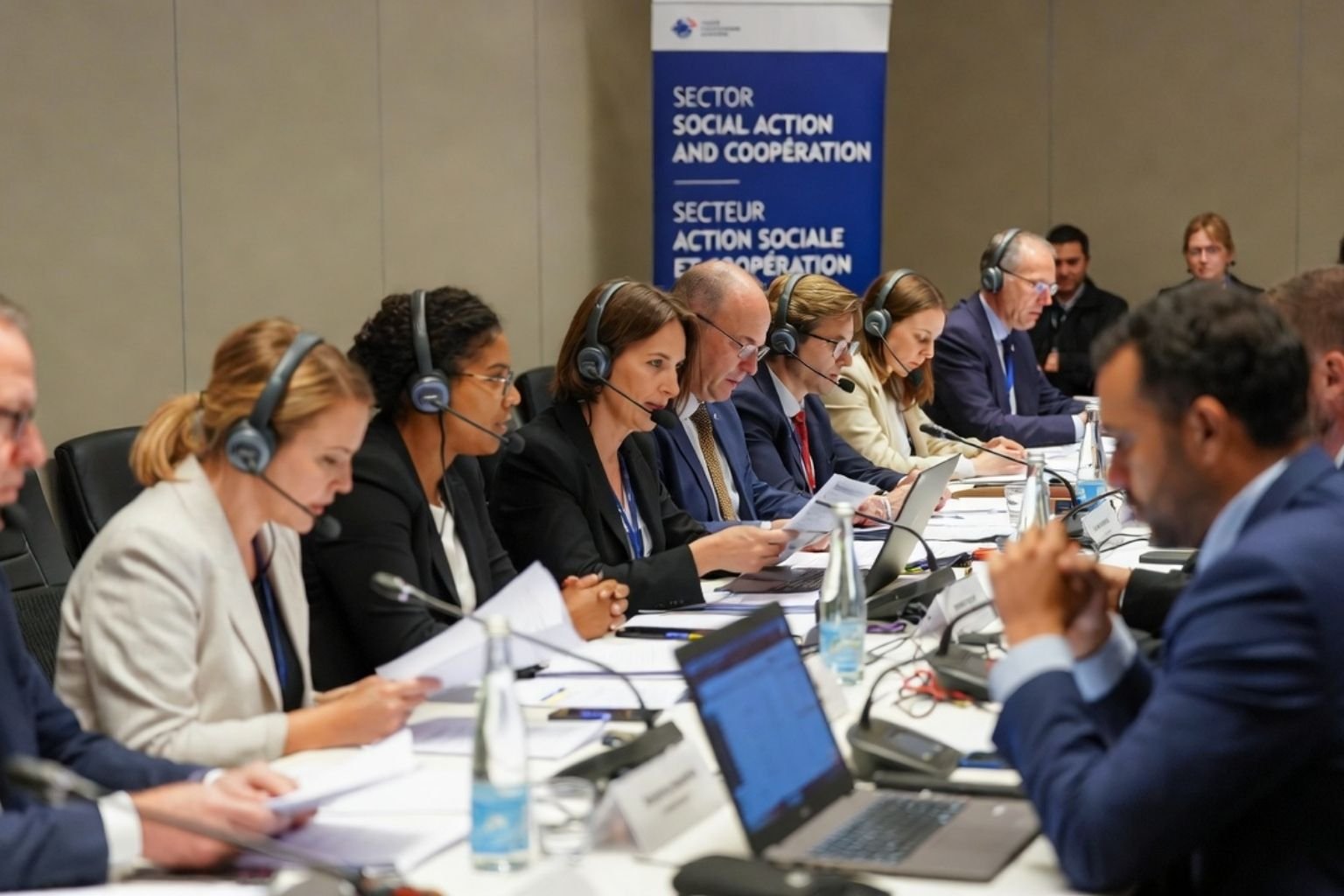
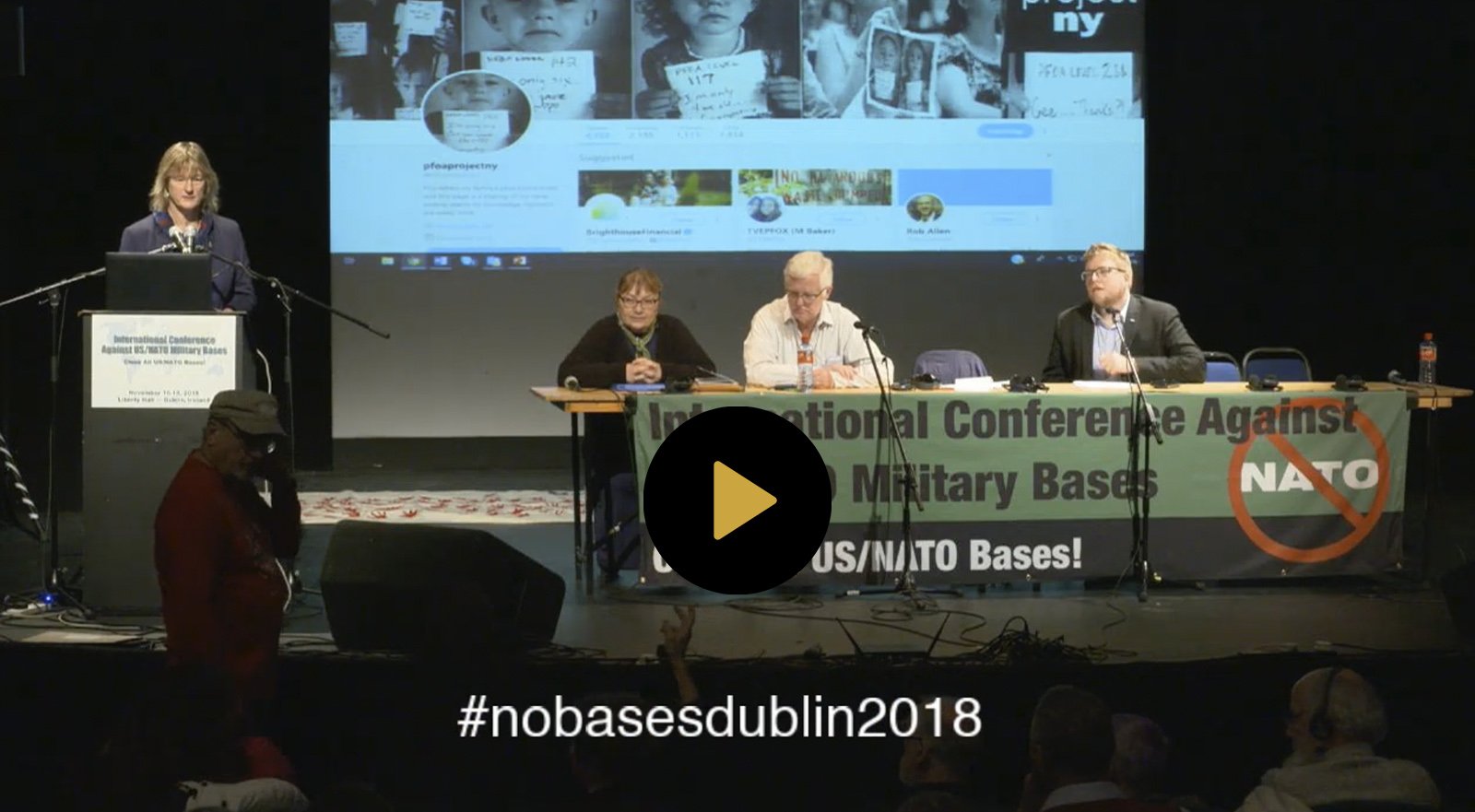
Conference Against U.S. and NATO Military Bases
Our added value: Technical rigour and first-hand field experience
The language of the sector is learned both in the interpreting booth and in the field. Our value as specialist interpreters lies in our insider understanding of the sector: we are familiar with its political dynamics, funding structures and operational realities.
Thorough Research and Tailored Preparation: Every conference, negotiation table and policy forum constitutes its own distinct terminological landscape. We leave nothing to chance and never rely on improvisation. Prior to every assignment, we undertake extensive documentary research, carefully reviewing technical reports, relevant case law, speakers’ publications and internal organisational glossaries. This enables us to master the precise terminology and conceptual framework of each project long before the microphone is switched on.
Direct Experience in International Cooperation and Programme Management: Our technical expertise is underpinned by years of hands-on work throughout Latin America and the Caribbean. We have extensive experience in the design and implementation of environmental and youth development programmes in Chile, as well as community development initiatives in the Dominican Republic, facilitating access to education, healthcare services and social empowerment opportunities for both Dominican and Haitian communities.
Sensitivity and Management of Critical Contexts: Having led organisations and worked on the front line of development and social justice initiatives, we possess a unique capacity to navigate forums involving highly sensitive testimonies or complex diplomatic negotiations. We serve as an invisible bridge of trust, maintaining absolute composure, impartiality and precision, even in emotionally charged environments.
Expertise in Governance and Regulatory Frameworks: We are thoroughly familiar with the technical architecture of international cooperation, United Nations frameworks, international humanitarian law and the OECD Guidelines for Multinational Enterprises. This enables us to engage seamlessly with delegates, subject-matter experts and advocates, speaking the same technical language and operating within the same conceptual frameworks.


Uncompromising ethics and confidentiality
In this sector, confidentiality is not a procedural formality; it is a safeguarding measure. We operate under a strict professional code of ethics that guarantees absolute impartiality and political neutrality. Our role is to ensure that the balance of power within the room remains intact, enabling the voices of local communities and those of international organisations to be heard with equal respect and institutional weight.


Respect for diversity and gender-inclusive language
We recognise that social justice is also advanced through language. For this reason, we are experienced in the rigorous application of inclusive language policies and, whenever requested by clients or speakers, we have the flexibility and technical expertise to incorporate gender-neutral pronouns seamlessly and naturally into our interpretation. In doing so, we ensure that each individual’s identity and preferred form of address are respected with the utmost accuracy and professionalism.


SUPPORT FOR DIALOGUE AND GRASSROOTS DIPLOMACY
We facilitate seamless communication between civil society, non-governmental organisations and bilateral or multilateral institutions. We adapt our register to match either the formal protocol of a ministerial roundtable or the more horizontal dynamics of a community workshop. Our objective is for interpretation to be so natural and precise that the language barrier becomes imperceptible, enabling negotiation, consensus-building and advocacy to progress smoothly towards institutional success.
AREAS OF PRACTICE IN THE SOCIAL ACTION AND DEVELOPMENT COOPERATION SECTOR
Specialised interpreting modalities
Simultaneous interpreting in the booth: This is the most suitable mode for international forums, general assemblies or human rights conferences. It enables delegates to follow speeches in real time, ensuring that political and social discourse retains its full force and technical nuance without interrupting the flow of communication.
Bilateral or liaison interpreting: Used in close-contact settings such as negotiation tables, conflict mediation processes or small working group meetings, where direct and close communication between parties is essential to reaching agreements.
Mobile interpreting (Infoport): Ideal for dynamic situations requiring mobility, such as field observation missions, project site visits or tours of reception facilities and humanitarian assistance centres.
Remote and hybrid interpreting: Tailored solutions for international webinars, virtual assemblies of NGO networks and global coordination meetings between offices in different countries.
Interpreting in diverse settings
International human rights conferences and civil society forums
Peace negotiation tables and mediation processes
Development cooperation summits and Sustainable Development Goals (SDG) monitoring meetings
NGO assemblies and international social action networks
Field observation and impact assessment missions
Donor conferences and accountability meetings
Technical training for humanitarian teams and field practitioners
Awareness-raising events and roundtables on climate justice and gender equality
FREQUENTLY ASKESD QUESTIONS
Where is Azucena Intérpreters based?
Azucena Intérpreters is based in Valencia, from where it coordinates conference interpreting services for companies, institutions and organisations. However, its scope is national and international, providing services across Spain, Europe and other countries, both on-site and in remote or hybrid formats.
Do you provide conference interpreting outside Valencia?
Yes. Although the company is based in Valencia, simultaneous and consecutive interpreting services are provided in any city across Spain or internationally. Thanks to a professional international network, full teams are also coordinated for multilingual events, including international conferences, institutional meetings and corporate events.
What materials does the interpreter need for preparation?
To ensure absolute fidelity to the message and its socio-political context, it is essential to have access to:
The detailed programme and agenda of the event: to understand the structure of the dialogue and speaking times.
Presentations and speeches: slides from speakers or drafts of institutional statements.
Internal glossaries and reference frameworks: documentation on specific projects, international organisation acronyms (UN, cooperation agencies), and humanitarian operating protocols.
Reports and position papers: background documents on the subject matter to fully grasp the technical stance of the organisation.
Does Azucena Intérpreters also manage technical equipment?
Yes. In addition to interpreting services, full technical equipment management is provided, including:
Interpretation booths
Sound systems
Individual receivers
Portable Infoport systems
Full technical coordination of the event
This ensures that clients can focus on content and strategy, leaving multilingual communication in expert hands.
How far in advance should an interpreting service be booked?
Given the high level of specialisation required in the fields of human rights and international cooperation, and the limited availability of interpreters trained in this technical and diplomatic terminology, it is recommended that services be confirmed at least two months in advance.
This lead time is essential for two critical reasons:
Availability of specialist teams: It ensures the availability of interpreters with proven experience in the specific subject matter of your event, whether peacebuilding, social justice or international legal frameworks.
Time for documentation and contextual preparation: It allows sufficient time for the team to carry out an in-depth review of all materials (treaties, field reports, protocols and SDGs). This guarantees maximum terminological accuracy and the level of sensitivity required when addressing highly complex social and political issues during the assignment.
Is it necessary to hire two interpreters?
For simultaneous interpreting assignments lasting more than 45 minutes, international quality standards require interpreter pairs. This ensures that concentration and accuracy do not decline, as interpreters take turns every 20–30 minutes in order to maintain the highest level of precision and consistency.
LEAVE YOUR SOCIAL ACTION AND COOPERATION EVENT IN EXPERT HANDS
Trust the interpreting of your forum, summit or international conference to specialists in high-level multilingual communication.
WE HAVE LENT OUR VOICE
We have contributed to international human rights summits, development cooperation forums and mediation tables for multilateral organisations, NGOs, foundations and governmental bodies committed to social impact and global peace.